


January 17, 2026Digital Marketing

What Is SEO? Complete Guide for Beginners

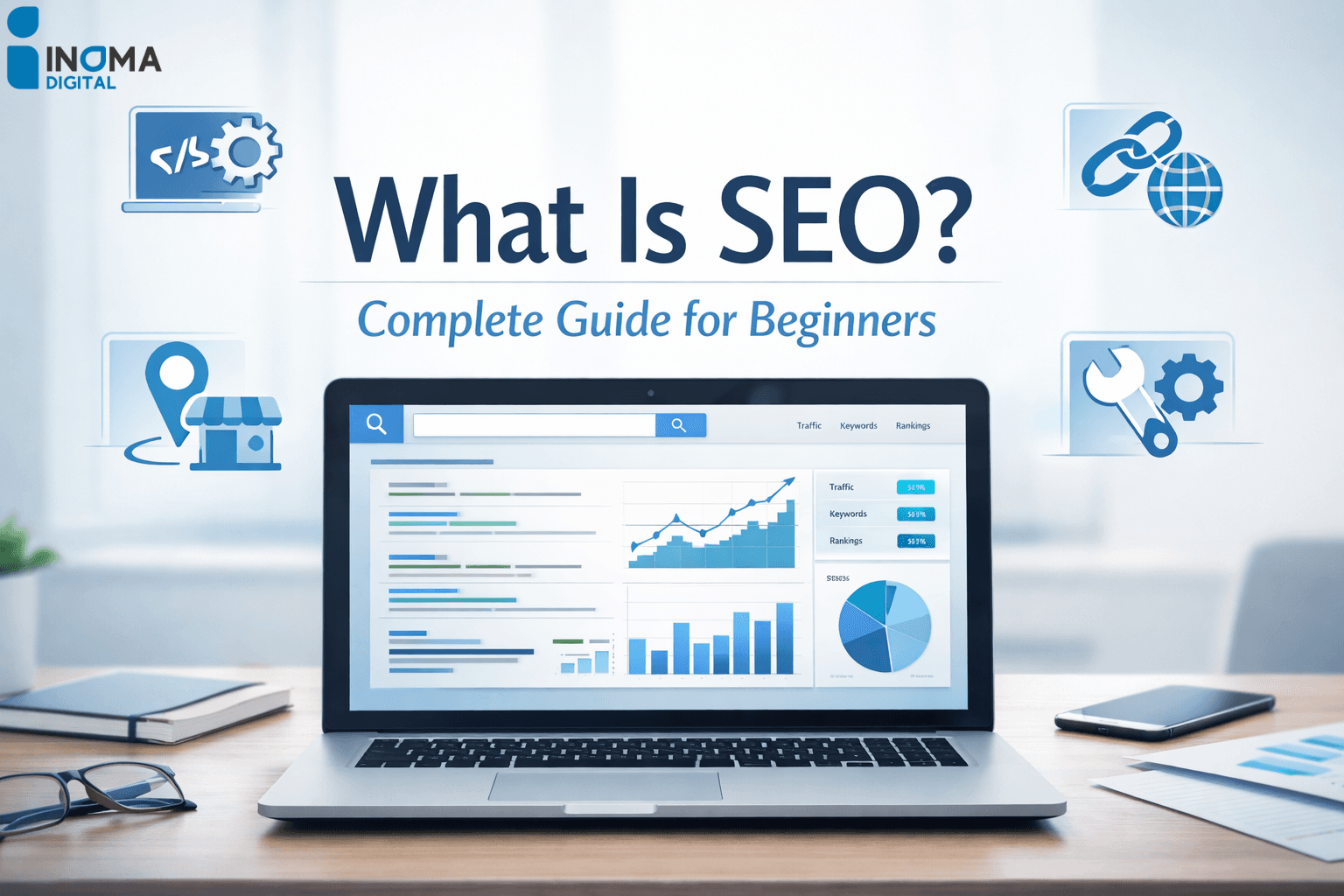
Featured image showing a modern digital marketing workspace with a laptop displaying SEO dashboards, keyword graphs, and analytics, with the headline “What Is SEO? Complete Guide for Beginners.”

In today’s digital landscape, understanding what is SEO is essential for any business or website owner. SEO, or Search Engine Optimization, is the process of optimizing websites to improve visibility in search engines like Google and Bing. When done correctly, SEO attracts organic traffic, builds brand credibility, and boosts conversions, making it a crucial component of digital marketing.

Whether you are a small business, e-commerce store, or service provider, this guide will help you understand SEO’s types, strategies, and best practices to grow your online presence.

Definition of SEO

SEO (Search Engine Optimization) is the practice of enhancing website content, structure, and authority to improve rankings in organic search results. By aligning your website with search engine algorithms, you attract qualified traffic, increase visibility, and improve user experience.

Steps for Understanding SEO

  1. Keyword Research – Identify terms your audience searches for.
  2. On-Page Optimization – Improve titles, meta tags, headings, and content.
  3. Off-Page Optimization – Build backlinks, brand mentions, and social signals.
  4. Technical SEO – Ensure fast, mobile-friendly, and crawlable websites.

Benefits of SEO

  • Drives higher organic traffic without recurring ad spend
  • Increases brand visibility and authority
  • Provides long-term ROI superior to many paid channels

Why SEO Matters for Businesses

SEO is more than a ranking tactic; it’s an essential strategy for modern businesses to grow online.

Benefits of SEO

  • Organic Traffic Growth – Attract users searching for relevant solutions.
  • Long-Term Visibility – Content optimized for SEO continues to perform over time.
  • Cost-Effective Marketing – Compared to PPC, SEO generates sustainable traffic at lower costs.
  • Trust & Credibility – Websites ranking high are perceived as more authoritative.
  • Supports Content Marketing & Conversions – SEO amplifies blog, video, and social content.

SEO vs Paid Advertising

  • Organic traffic vs paid traffic
  • Long-term results vs short-term visibility
  • Budget considerations: SEO requires time investment, paid ads require financial investment

Types of SEO

SEO is divided into several types, each addressing different aspects of website optimization. Understanding these types allows you to create a comprehensive SEO strategy that improves rankings, attracts traffic, and enhances user experience.

1. On-Page SEO

On-page SEO involves optimizing the content and structure of your website to improve search engine rankings and enhance user experience. This type ensures that both search engines and visitors understand your content.

Key Elements:

  • Keyword Research & Placement – Target relevant keywords in content naturally
  • Title Tags & Meta Descriptions – Optimize for search engines and click-throughs
  • Header Tags (H1–H6) – Organize content for readability
  • URL Optimization – Use descriptive, keyword-friendly URLs
  • Internal Linking – Connect related pages to improve navigation and SEO
  • Image Optimization – Use alt text for accessibility and ranking
  • Content Quality & Readability – Focus on solving user intent

Tools: SEMrush, Ahrefs, Yoast SEO

2. Off-Page SEO

Off-page SEO refers to all activities outside your website that influence search engine rankings. It primarily focuses on building authority, trust, and relevance in your industry.

Key Strategies:

  • Link Building – Guest posts, editorial links, resource pages
  • Brand Mentions & Social Signals – Increase online authority
  • Reputation Management – Maintain positive online presence
  • Digital PR Campaigns – Earn coverage and backlinks from authoritative sources

Tools: Moz Link Explorer, Ahrefs

3. Technical SEO

Technical SEO ensures your website is structured for search engines to crawl, index, and rank it effectively. It focuses on backend optimization and site performance.

Key Components:

  • Mobile-friendly design
  • Website speed optimization
  • HTTPS security
  • XML sitemaps & robots.txt
  • Schema markup & structured data
  • Core Web Vitals: LCP, FID, CLS

Tools: Google Search Console, Screaming Frog

4. Local SEO

Local SEO focuses on optimizing your online presence to attract customers in specific geographic locations. It’s especially important for small and medium-sized businesses serving local communities.

Key Practices:

  • Optimize Google Business Profile
  • Create local citations and backlinks
  • Encourage reviews & ratings
  • Target location-based keywords

Local SEO is especially critical for small businesses like restaurants, clinics, and retail stores.

How SEO Works (Step-by-Step)

  1. Conduct Keyword Research – Find relevant, high-intent keywords.
  2. Optimize Website Structure – Ensure content is organized for easy navigation.
  3. Create High-Quality Content – Solve user queries and provide value.
  4. Build Backlinks – Earn links from authoritative sites.
  5. Monitor and Analyze Performance – Use metrics to refine strategy.

Metrics & Tools:

  • Google Analytics & GA4
  • Google Search Console
  • Keyword rankings, traffic, bounce rate, CTR, conversion rate

Common SEO Challenges and Solutions

Challenges

  • Algorithm updates causing ranking drops
  • Low traffic despite content
  • Poor website structure or UX
  • Duplicate content issues
  • Competition for high-value keywords

Solutions

  • Stay updated with Google algorithm changes
  • Conduct technical audits regularly
  • Improve content quality and relevance
  • Build authoritative backlinks
  • Use structured data and schema markup

SEO Tools and Platforms

Analytics Tools

  • Google Analytics, GA4, Google Search Console

Keyword Research Tools

  • Ahrefs, SEMrush, Ubersuggest

Technical & On-Page Tools

  • Screaming Frog, Yoast SEO, Rank Math

SEO Best Practices for Beginners

  • Focus on user intent and high-quality content
  • Optimize for mobile and Core Web Vitals
  • Use long-tail keywords naturally
  • Link internally to related pages
  • Regularly audit and update content
  • Measure performance and adjust strategies

Conclusion – Improve Your Website with SEO

Understanding what SEO is and implementing the right strategies is essential for digital marketing success. Combining on-page, off-page, technical, and local SEO helps your website attract traffic, rank higher, and convert visitors into customers.

👉 Need expert SEO strategies to grow your business? Contact Inoma Digital for data-driven SEO solutions that deliver traffic, leads, and measurable results.

Frequently Asked Questions About SEO

What is SEO in simple words? +
SEO is the process of optimizing websites to improve visibility in organic search and attract relevant traffic.
Why is SEO important for websites? +
SEO increases online visibility, drives qualified traffic, builds credibility, and supports long-term digital marketing growth.
How long does SEO take to show results? +
SEO results vary, but most websites see noticeable improvements within 3–6 months depending on competition and strategy.
What are the main types of SEO? +
The main types of SEO are on-page SEO, off-page SEO, technical SEO, and local SEO.
Prev
Next

Inoma Digital

A digital agency built on systems, clarity, and long-term results. Helping businesses through strategy, design, technology, marketing and business growth.

Featured Blogs

Recent Blogs